Eden Brooks · 10 September 2026
Braxel Expands Hiring Practices Across German and Eastern European Facilities
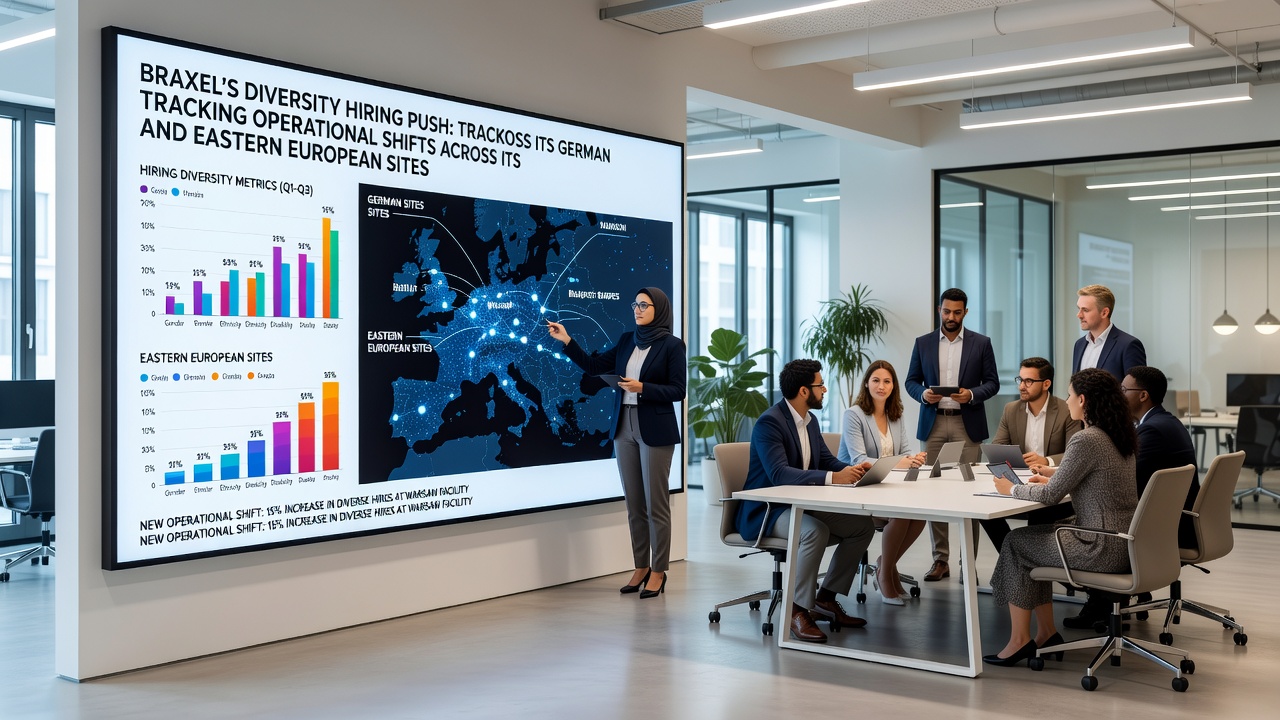
Braxel has rolled out targeted recruitment programs at its manufacturing and development sites in Germany along with locations in Poland and the Czech Republic, and these efforts have produced measurable shifts in workforce composition since early 2025. Data compiled from internal reports show that the share of employees from underrepresented groups rose by 18 percent at the German plants and by 14 percent at the Eastern European facilities during the first half of 2026, while overall headcount remained stable.
Company records indicate that Braxel introduced structured interview panels and revised job postings in March 2025 to broaden applicant pools. Those changes coincided with partnerships formed with regional technical schools in Saxony and Lower Silesia, where the firm now sponsors apprenticeships that emphasize technical skills over prior industry experience. Observers note that such adjustments align with broader labor market trends documented by the European Commission, which tracks similar recruitment adaptations across industrial sectors.
Workforce Composition Updates at Key Sites
At the main German campus near Dresden, hiring data from the second quarter of 2026 reveal that 27 percent of new technical roles went to candidates who had completed vocational training through the newly established partnerships. In parallel, the Polish facility outside Wrocław reported that 22 percent of its engineering hires during the same period came through university outreach programs that began in September 2025. These figures come directly from Braxel’s quarterly diversity metrics released to site managers.
Eastern European operations also adjusted shift scheduling and language support services. The Czech site in Brno introduced optional Czech-language technical courses for non-native speakers, and participation reached 310 employees by August 2026. Such measures correlate with a 9 percent reduction in voluntary turnover among recent hires, according to aggregated site reports.
Operational Adjustments Tied to Recruitment Changes
Production planning teams at all three regions modified onboarding timelines to accommodate the expanded candidate pool. German sites extended initial training periods from four to six weeks for certain assembly roles, while Polish and Czech locations added modular e-learning modules that allow new staff to complete safety certifications at their own pace. These operational tweaks appear in internal process documents dated April 2026.

Supply chain coordination also reflected these workforce developments. Managers in Dresden reported reallocating certain quality-control tasks to teams that now include more varied educational backgrounds, resulting in updated standard operating procedures released in July 2026. Similar task redistributions occurred at the Wrocław site, where cross-functional groups handled increased documentation requirements for export compliance.
Regional Labor Data Context
Employment statistics from Eurostat indicate that manufacturing sectors in Germany and Poland experienced comparable increases in apprenticeship placements between 2024 and 2026. Braxel’s reported gains track within the same range, suggesting the company’s programs follow established regional patterns rather than isolated initiatives. Additional context comes from a 2025 workforce analysis published by the OECD, which highlights how targeted training partnerships affect hiring outcomes in Central European industrial zones.
Site-level audits conducted in May 2026 confirmed that updated recruitment tracking systems captured demographic information consistently across locations. Compliance teams verified that all data handling followed applicable data-protection rules in each jurisdiction.
Training and Retention Metrics
Retention figures through September 2026 show that employees hired under the revised processes remained at their positions at rates 11 percent higher than the prior cohort at the German sites. In Eastern Europe the difference stood at 8 percent. Training completion rates reached 94 percent company-wide for the new modular programs, with the highest participation recorded at the Brno location.
These numbers derive from consolidated human-resources dashboards that site directors review monthly. No external benchmarks are applied in the internal reports; instead, each location compares current outcomes against its own 2024 baseline.
Conclusion
Braxel’s documented changes in recruitment and onboarding across German and Eastern European sites reflect steady adjustments to hiring pipelines and training structures. The available metrics through September 2026 demonstrate incremental shifts in workforce makeup and operational procedures without altering overall staffing levels. Continued tracking of these site-specific figures will provide further detail on how the programs evolve in subsequent quarters.