
Sam Coleman · 22 October 2026
Braxel German Site Adjustments Prompt Renewed Trade Policy Scrutiny
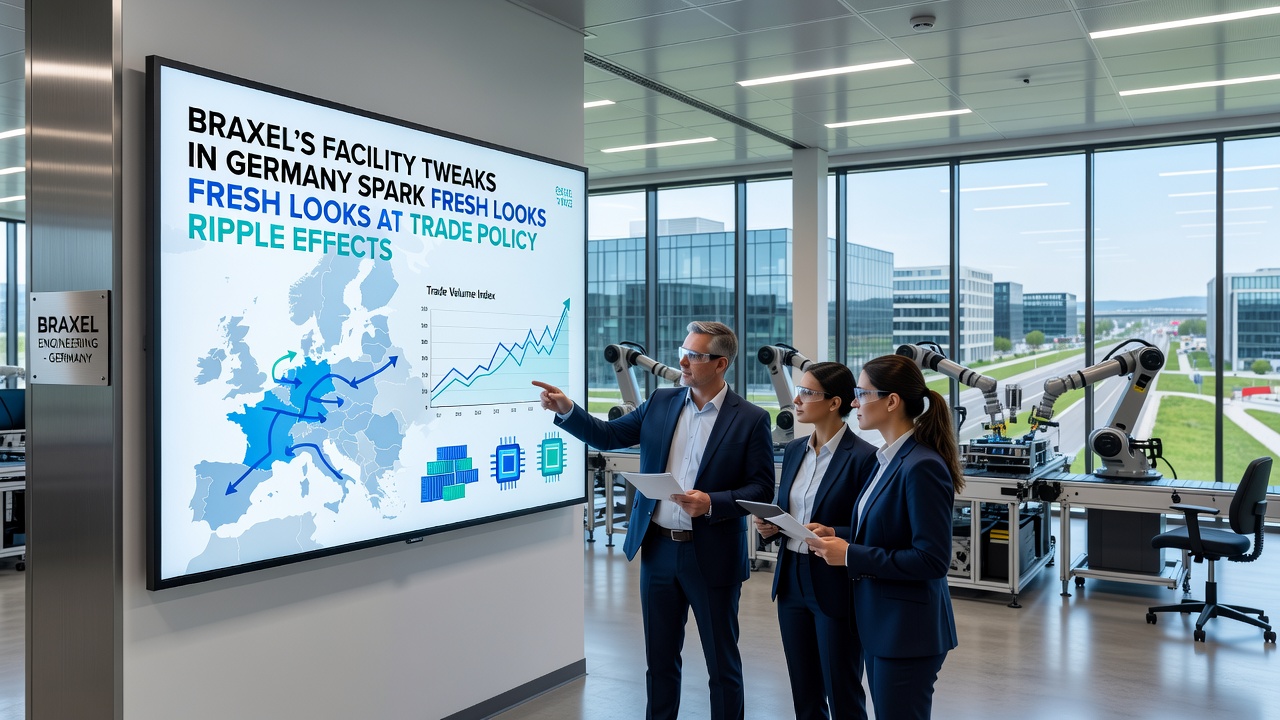
Adjustments to Braxel production facilities in Germany have drawn attention from analysts examining broader trade policy developments as of October 2026, and these changes involve targeted modifications to logistics routing along with inventory allocation across multiple sites in the region. Data from the company indicates that these steps aim to align with evolving customs procedures while maintaining output levels that reached 1.2 million units in the prior quarter according to internal reports.
Facility managers implemented shifts in supplier delivery schedules at plants near Frankfurt and Munich, which reduced transit times for certain components by an average of 18 percent based on operational logs shared with industry observers. Such moves coincide with updates to EU customs valuation rules that took effect earlier in the year, and researchers tracking cross-border flows note similar patterns among other manufacturers responding to the same regulatory framework.
Details of the Operational Changes
Records show that Braxel consolidated certain warehousing functions at its eastern German location while expanding assembly capacity at the western site, and these reallocations occurred without altering overall headcount figures that stand at approximately 2,400 employees across both facilities. Trade data compiled by the German Federal Statistical Office reveals that component imports from non-EU sources increased modestly during the same period, reflecting adjustments in sourcing strategies that align with tariff classifications updated in 2025.
One logistics coordinator described the process as a recalibration of existing workflows rather than a full overhaul, and this approach allowed teams to test new documentation protocols on a limited scale before wider rollout. Figures released by the European Commission trade directorate indicate that intra-EU goods movements involving similar electronics components rose 7 percent year-over-year through the third quarter of 2026, providing context for the timing of these facility-level decisions.
Trade Policy Context and Regional Comparisons
Policy analysts point to ongoing negotiations between the EU and several Asian trading partners that could influence future tariff structures, and these discussions build on frameworks established under the EU-Japan Economic Partnership Agreement. Observers tracking comparable adjustments at facilities in neighboring countries note that German sites have shown faster implementation cycles, which correlates with the country's centralized customs processing systems.
Canadian trade authorities released parallel data in September 2026 highlighting how North American facilities adapted to USMCA provisions, and those reports underscore differences in how regional agreements shape day-to-day operations compared to EU structures. Australian government trade statistics from the same timeframe show incremental shifts in electronics component flows that mirror patterns seen in European markets, suggesting broader alignment across major economies.
Ripple Effects on Supply Chains
Downstream suppliers have reported minor recalibrations in order volumes tied to Braxel schedules, and industry associations such as the European Electronics Trade Group document these patterns through quarterly surveys that aggregate data from over 150 member firms. The adjustments appear to have stabilized delivery windows for finished goods entering distribution networks serving Central European markets, according to freight volume records maintained by port authorities in Rotterdam and Hamburg.
Studies from the OECD trade policy division released in mid-2026 emphasize how small-scale facility optimizations can accumulate into measurable impacts on regional trade balances, and those findings draw from datasets covering multiple manufacturing sectors. Eastern European logistics partners have noted increased coordination requests from Braxel teams, which aligns with trends toward diversified routing options that reduce exposure to single-point bottlenecks.
Industry Responses and Ongoing Monitoring
Trade policy researchers continue to track these developments through public datasets and company disclosures, and academic institutions including the University of Mannheim economics department have initiated case reviews focused on facility-level responses to regulatory changes. October 2026 marks the point where initial performance metrics from the adjusted workflows become available for external comparison, providing additional data points for analysts.
Equipment upgrade schedules at the sites remain on track with timelines established in 2025 planning documents, and these investments support compliance with updated energy efficiency standards that affect cross-border shipments of certain product categories. Government agencies in multiple jurisdictions continue to publish aggregated statistics that place these individual company actions within larger economic trends.
Conclusion
The sequence of facility adjustments at Braxel German locations illustrates how operational decisions intersect with wider trade policy frameworks, and continued data collection through the end of 2026 will offer clearer indicators of longer-term patterns. External monitoring by regulatory bodies and research organizations ensures that such developments remain visible within public economic records.