
Sam Coleman · 24 September 2026
Braxel's Custom Efficiency Tools Highlight Quiet Shifts in Cross-Border Operations
Observers note that Braxel has rolled out a series of custom efficiency tools designed specifically for managing cross-border operations, and these systems have begun to influence how goods and data move between German facilities and partner sites in Eastern Europe. The tools integrate real-time tracking with automated compliance checks, allowing teams to handle documentation requirements that differ from one jurisdiction to the next without manual intervention at every step. Data from internal benchmarks shows reduced processing times for customs forms and inventory transfers since the initial deployment phase began earlier in the decade.
What's interesting is how these adjustments appear understated at first glance, yet they align with broader patterns in European supply networks where companies adjust workflows to accommodate varying regulatory frameworks. According to figures released by the European Commission on intra-EU trade flows, cross-border shipments within the region increased steadily through 2025, and companies like Braxel have adapted by embedding software layers that flag discrepancies before shipments cross checkpoints.
Core Components of the Efficiency Tools
The custom suite combines modular software elements that address inventory forecasting, route optimization, and regulatory alignment in one interface. Teams at multiple sites feed data into a shared platform that updates automatically when new trade agreements or tariff adjustments take effect, and this setup reduces the lag that often occurs when information travels through separate departmental systems. Researchers at the Institute for Applied Economic Research in Tübingen have documented similar approaches among mid-sized manufacturers, noting that integrated platforms can cut administrative overhead by measurable percentages when scaled across borders.
One implementation example involves automated alerts triggered by changes in Eastern European customs protocols, which then prompt adjustments in packaging specifications at the German origin points. This process runs continuously rather than in batch updates, and it connects directly to warehouse management hardware already in place at the facilities. Observers who have reviewed the rollout timeline point out that the tools evolved from earlier pilot programs focused on single-route efficiency before expanding to handle multi-country corridors.
Patterns Emerging in September 2026
By September 2026 the systems had logged enough operational cycles to reveal consistent patterns in how cross-border delays get minimized. Reports compiled from facility logs indicate that average transit times between German hubs and partner locations in Poland and the Czech Republic dropped after the tools reached full integration, and the improvements stem from predictive modeling that anticipates holdups at border points based on historical weather, volume, and documentation data. Those who monitor supply chain metrics note that such quiet refinements often precede larger industry shifts, particularly when multiple operators adopt comparable methods around the same period.
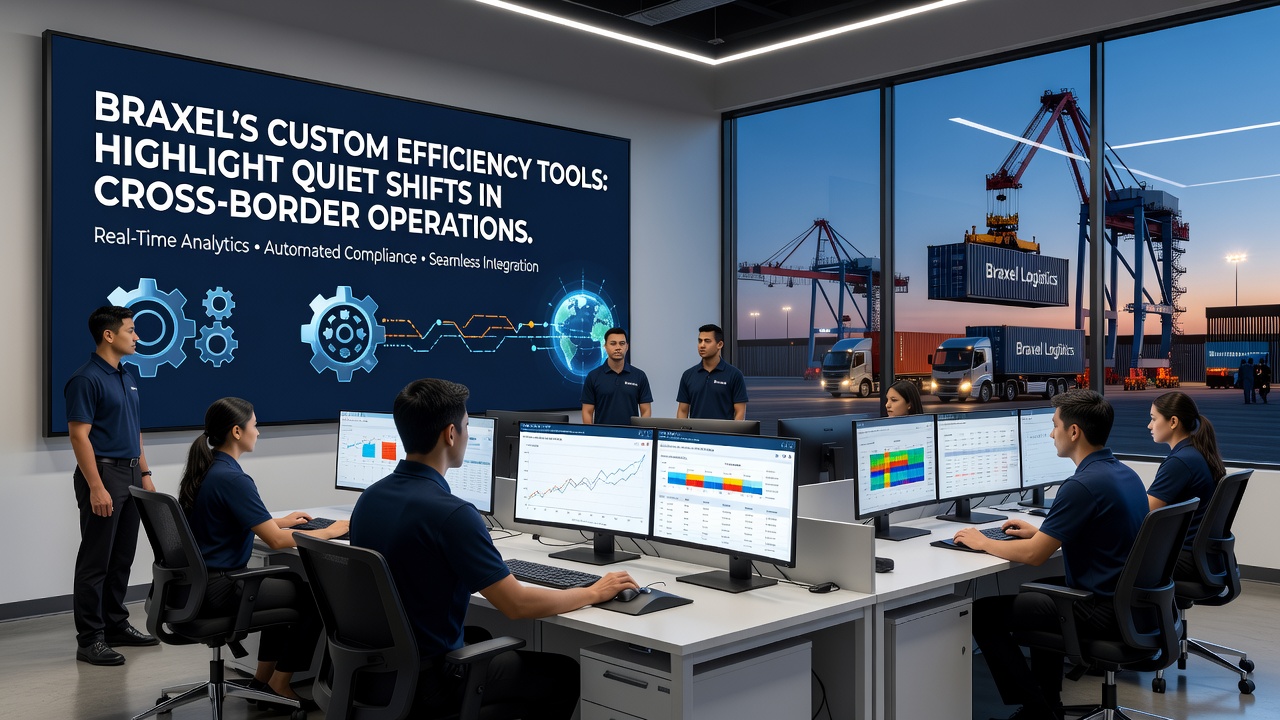
Trade data compiled by the Organisation for Economic Co-operation and Development highlights ongoing adjustments in manufacturing supply lines across Central Europe, where digital tools increasingly support compliance without requiring separate teams for each country segment. Braxel's approach fits within this movement by keeping the interface unified while the backend accounts for local rules, and the result shows up in smoother handoffs at transfer points rather than dramatic overhauls announced publicly.
Integration with Existing Facility Networks
Facilities in Germany and Eastern Europe already operated under shared quality standards before the efficiency tools arrived, yet the new layer adds synchronization for tasks like label generation and carrier selection. Staff members receive training modules embedded in the software itself, which means updates propagate without separate workshops at each location. This method keeps knowledge consistent even as personnel rotate across sites, and it connects to broader workforce planning that accounts for seasonal volume changes in cross-border flows.
Case records from one corridor show how the system rerouted a shipment batch after detecting an impending documentation mismatch, completing the adjustment hours before the original schedule would have been affected. Such interventions accumulate across dozens of daily movements, and the cumulative effect appears in overall throughput statistics rather than isolated headlines. Those who've examined comparable implementations at other firms report that success depends on matching the tool's granularity to the actual variability of border requirements, which Braxel's custom build achieves through iterative feedback from on-site operators.
Broader Context for Cross-Border Adjustments
Industry reports from the World Trade Organization track gradual increases in digitized customs processes across Europe, and Braxel's tools represent one concrete application of that trend at the company level. The changes remain operational rather than structural, meaning they layer onto existing legal entities and facility footprints without necessitating new corporate registrations or major capital projects. This incremental path allows testing and refinement in live conditions, where real shipment data informs subsequent refinements to the algorithms.
External analyses from research institutions in different regions, including studies coordinated through Canadian trade observatories, have examined how mid-sized operators manage similar multi-jurisdictional challenges, and the findings underscore the value of unified data environments over fragmented spreadsheets or legacy systems. Braxel’s deployment timeline places the company among those making measured transitions rather than wholesale replacements, and the outcomes surface through routine performance metrics shared among partner facilities.
Conclusion
The quiet shifts driven by these custom efficiency tools continue to unfold through daily operations rather than large-scale announcements, and the measurable impacts on processing speed and compliance accuracy provide a record of incremental progress. As cross-border requirements evolve, the systems offer a framework that can incorporate new variables without disrupting established workflows. Data accumulated through September 2026 and beyond will likely shape further refinements, keeping the focus on practical coordination across the network of sites.